Turkish military
The Museum of InnocenceThe Turkish military enters the story as a force that can abruptly reorganize public life and reach into its most ordinary routines. Its September 12, 1980 coup empties streets, fills the television with military announcements, and imposes a curfew that shortens Kemal’s evenings with Füsun and her family. The account does not offer an institutional portrait of the military; instead, its power is registered through what people see, what they fear, and the hours they are no longer free to spend together.
The Coup and Its Public Display
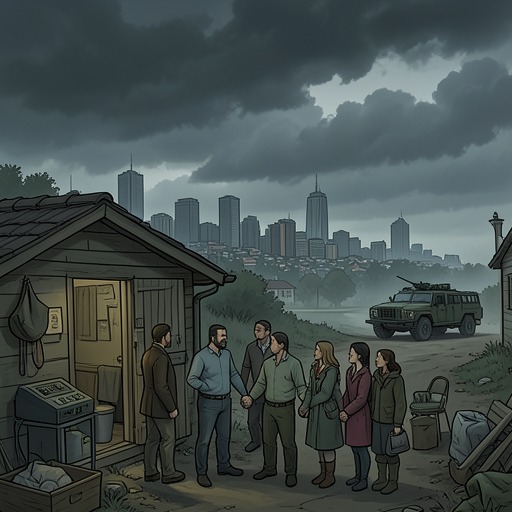
On the morning of September 12, 1980, Kemal wakes before the others and recognizes the change from the emptiness of Teşvikiye Avenue and the side streets. Army trucks soon pass, carrying soldiers who sing martial songs. The television shows flags and military parades and broadcasts the generals who have seized power. Kemal then goes onto the balcony, where the silence of the city and the rustling chestnut leaves in the mosque courtyard form a stark contrast with the parade imagery on the screen. His recollection also links the scene to an earlier morning: exactly five years before, he had stood on the same balcony with Sibel after their end-of-summer party.
The coup is at once a political rupture and a familiar recurrence in Kemal’s understanding of the country. He takes the sudden military intervention as recognizable partly because coups, he observes, seemed to arrive every ten years. That sense of repetition does not make the event harmless: the all-day curfew, the trucks, and the prospect of arrests give the familiar pattern immediate force. The military’s takeover is announced to households through television, while its presence is encountered outside in the enforced stillness of the streets.
Martial Law and Enforcement
The first day’s curfew keeps people indoors. From his home, Kemal sees army trucks speed along the avenue and infers that politicians, journalists, and others are being taken from their houses into custody. Newspapers issue special editions welcoming the coup; on television, the generals’ announcement is replayed between old images of Atatürk. The account distinguishes these visible broadcasts from the arrests themselves: Kemal does not witness the detentions, but reads the trucks and the reports as signs of a crackdown.
Martial law extends beyond prominent political figures. At the Keskin family’s dinner table, news reaches the household that authorities are jailing people accused of a broad range of offenses, including swindling, running brothels, selling black-market cigarettes, violating traffic rules, writing slogans on walls, and involvement in pornographic films. People linked to terrorism are summarily executed as examples to others. When such news is discussed, the family falls silent. The account also records that university lecturers are fired and that the Pelür Bar is emptied along with similar establishments. Together, these details show the coup’s effects spreading from political opponents to ordinary conduct, workplaces, and places of social gathering.
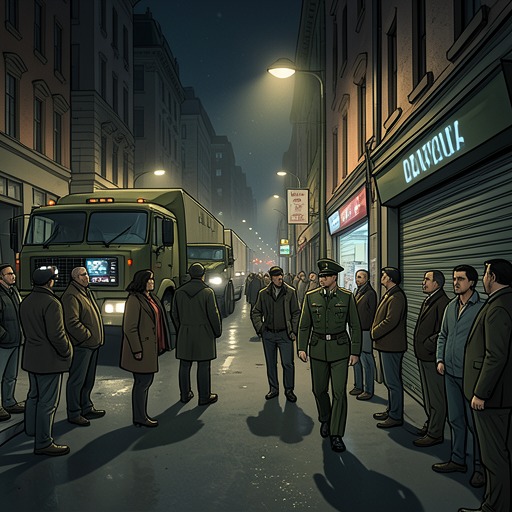
A later checkpoint makes military authority tangible at close range. Four months after the coup, fifteen minutes before curfew, soldiers stop Kemal and his driver, Çetin, on Sıraselviler Avenue to check identity cards. Kemal has his papers in order, but a soldier notices a quince grater beside him in the car. Kemal had taken it from the Keskin home without being seen; a higher-ranking soldier warns that it could be used as a weapon and cause serious injury, then allows him to keep it on condition that he does not carry it out again. The encounter turns an ordinary household object into the focus of a roadside inspection and shows how even a small private act can become legible to military scrutiny.
Curfew and Private Time
The ten o’clock curfew changes the practical terms of Kemal’s regular suppers at the Keskin home. He began visiting in 1976 and, over seven years and ten months, made 1,593 visits. Before the coup, he usually arrived around seven and left soon after the television’s nightly closing ceremony near midnight, spending an average of about five hours per visit. Under the curfew he must leave at a quarter to ten, while the evening still feels unfinished to him. On the drive home through dark, rapidly emptying streets, the curtailed visit becomes a particular form of deprivation: he feels that he has not seen enough of Füsun.
This interference is especially sharp because the household’s routine is already organized around television. The family uses the broadcast schedule to mark the evening; at seven, Füsun and her father check their watches against the clock shown before the news on the country’s only television channel, TRT. The coup turns that familiar medium into a vehicle for generals’ speeches and lectures to the nation, while the curfew imposes an external deadline on the supper gathering. Public authority thus interrupts a private rhythm that had been built through repeated meals, television, and conversation.
Narrative Significance
Kemal’s account measures the coup less through political analysis than through changes in lived routine: an empty avenue, repeated announcements, a checkpoint, a silenced dinner table, and the lost minutes before curfew. He recalls that military coups were accompanied by arrests, executions, and restrictions, but his most vivid personal grievance is that the curfew forces him away from Füsun before he feels ready to leave. That narrowed perspective does not erase the wider repression described around it; rather, it places national coercion beside the intimate life it constrains.
The Turkish military’s role in these episodes is therefore defined by its power to control movement, public information, and the boundaries of the evening. Its presence does not end when the broadcast is switched off: it determines when Kemal must depart, shapes what the family hears and fears, and turns an otherwise ordinary journey home into an encounter with military authority. The coup’s political time presses into the Keskin household’s private time, making the curfew both a state measure and a recurring limit on Kemal’s access to the life he longs to share.